
French Alps
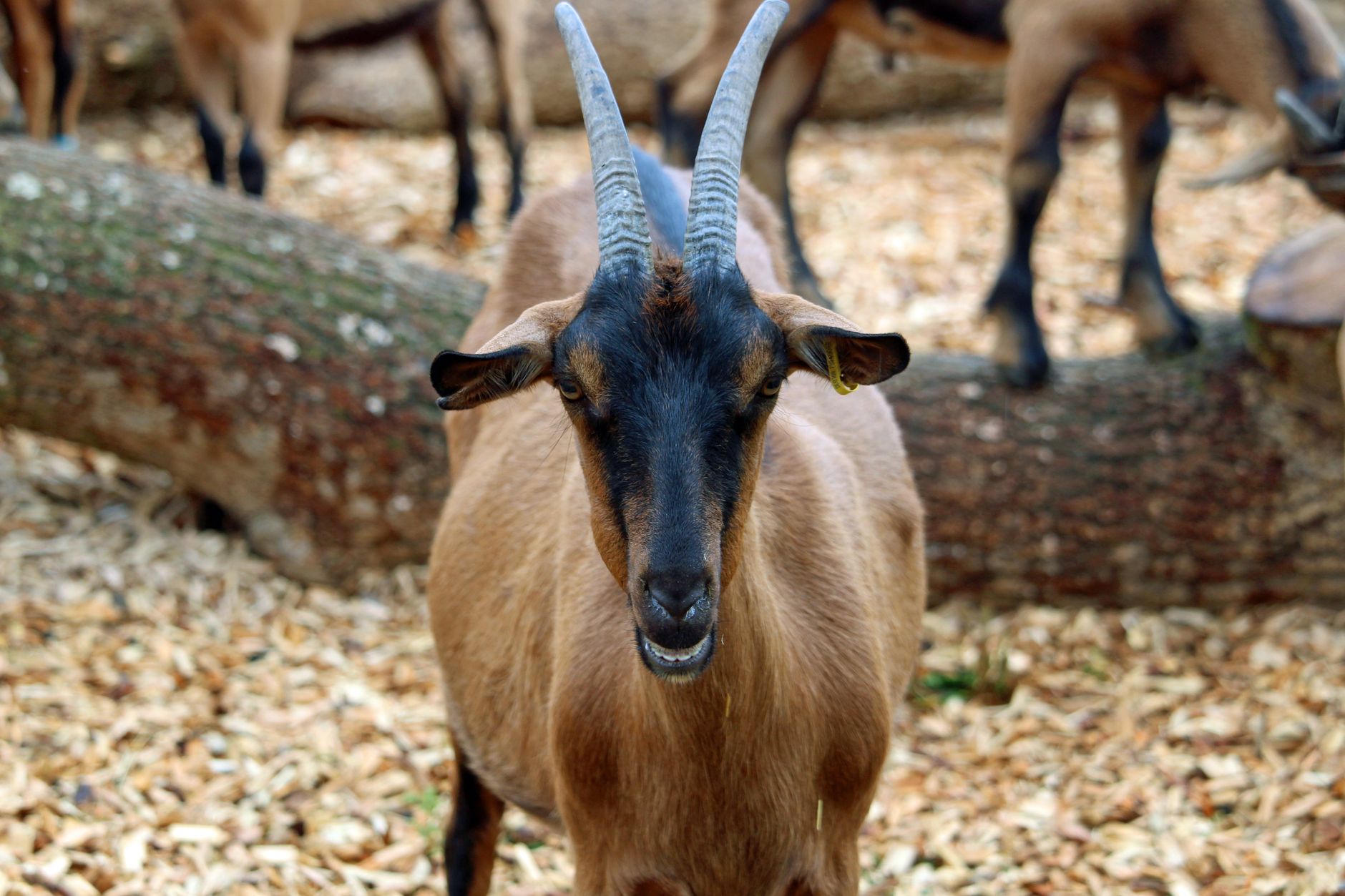
Alpine
Hardy milkers with upright ears and a curious, alert temperament. Famous for rich, high-butterfat milk.

A field guide · Capra aegagrus hircus
Browsers of cliffs, thinkers of puzzles, givers of milk. Goats have walked beside us for ten thousand years — and they still surprise the people who know them best.
An introduction
A goat is not a small cow, and not a strange sheep. It is its own kind of animal — stubborn, social, surprisingly clever, and built to climb the kind of terrain where other livestock would not dare to set a hoof.
Domesticated from the wild bezoar ibex of the Zagros Mountains around 10,000 BCE, goats were the original portable economy: meat, milk, fiber, hide, even fuel from their dung. Today more than a billion goats are kept across the world, from the rocky highlands of Wales to the dry scrublands of the Sahel.
A few of the many
There are over three hundred recognized breeds. These four capture the range — from dairy to fiber to meat to mountain survival.
Hardy milkers with upright ears and a curious, alert temperament. Famous for rich, high-butterfat milk.
Long, pendulous ears and a Roman nose give them a regal look. Their milk is high in cream — ideal for cheese.

Grown for their lustrous mohair fleece, these gentle grazers need shearing twice a year.
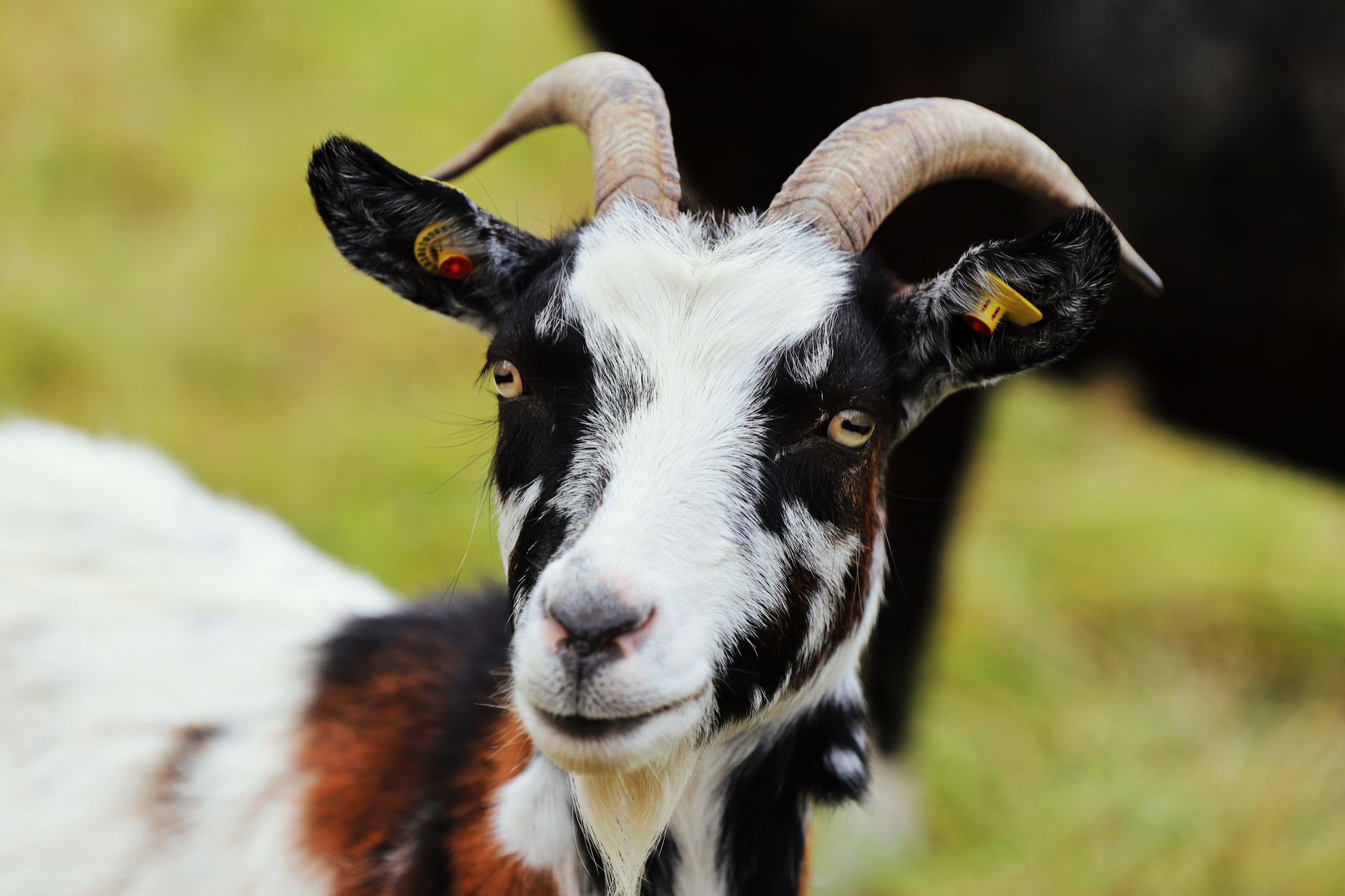
Sturdy meat goats with a calm disposition and the distinctive brown head and white body.
By the numbers
Goats pass intelligence tests that stump many mammals. They can learn to open latches, remember faces for years, and follow a human pointing gesture — a skill that baffles most other animals.
Goats were among the first animals herded by humans, long before sheep or cattle.
From the tiny Nigerian Dwarf to the mighty Boer, adapted to nearly every climate.
Rectangular pupils give goats a 320° field of vision — almost no blind spot.
Mountain goats can scale near-vertical cliffs and leap five feet from a standstill.

A long partnership
Archaeological sites in the Fertile Crescent hold the earliest bones of domesticated goats — animals that fed the first cities, clothed their people, and paid for the ships that connected them. The goat is, in many ways, the original global trade good.
Hunter-gatherers in present-day Iran and Iraq begin herding the wild bezoar ibex — the ancestor of every domestic goat alive today.
Sailors carry goats to Crete, Egypt, and the Iberian Peninsula. Their milk, meat and hides become pillars of local economies.
Spanish and Portuguese ships bring goats to the Caribbean and the Americas, where they thrive in arid landscapes no other livestock could.
More than one billion goats are kept worldwide — a quiet, patient empire that has outlasted empires of kings.
Up close


Tell us about yours
Whether you keep two goats in a backyard or two hundred on a hillside, we'd love to hear from you. Drop a line and we'll write back.